What Makes a Good Falooda: The Layers That Matter
By Panjtan Juice · Published 26 October 2026
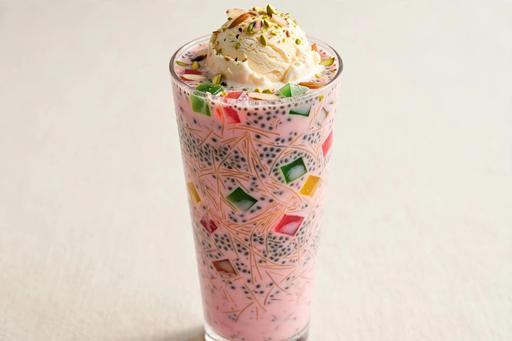
Almost every juice shop in Quetta can put falooda ingredients into a tall glass. Far fewer can make a falooda you remember the next day. The difference is rarely a secret ingredient. It is balance: every layer doing its own job, nothing shouting over the rest, and the whole glass staying cold, soft and interesting from the first spoon to the last sip. A good falooda is built, not poured, and you can taste the order in which it was built.
Cold First, Always
Temperature is the foundation, and it is non-negotiable. The milk must be properly chilled, the kulfi or ice cream dense and cold, and the glass itself cool enough that nothing melts into soup in the first five minutes. A falooda served lukewarm is not a slightly worse falooda; it is a different, disappointing dessert. When you order, notice how long the glass holds its cold: a good one stays refreshing to the bottom, because the cold ingredients were cold before they met, not chilled afterwards by a handful of ice that waters everything down.
The Noodles Should Be Soft, Not Soggy
Falooda noodles, the thin vermicelli strands at the heart of the glass, are where many faloodas fail quietly. Cooked too long, they turn to mush and disappear; undercooked, they stay stiff and distracting. Done right, they are soft, slippery and almost neutral in taste, giving the spoon something to find in every mouthful without stealing the flavour. If you prefer a glass without them altogether, that is a real choice too — our falooda without noodle (Rs 350) keeps the rest of the build intact for people who want cream and jelly without the strands.
Kulfi and Ice Cream Carry the Flavour
The creamy top is the flavour anchor. Traditional kulfi brings a dense, milky richness that ordinary soft ice cream cannot copy, while a good scoop of ice cream adds smoothness and a cleaner sweetness. Either way, the cream layer must taste of milk first and sugar second. If the first spoon is only sweet, the glass will tire you halfway through. A well-made falooda lets the milk flavour come through, then adds fruit, jelly or nuts as accents rather than rescue attempts. This is also why the quality of the scoop matters more than its size:
Jelly, Seeds and Nuts Are Texture, Not Decoration
Every extra in a falooda earns its place by changing the texture. Basil seeds, soaked until they turn soft and jelly-like, add a gentle slipperiness that makes the glass feel light. Fruit jelly adds colour and a soft bounce, and a spoonful of it between creamy layers stops the dessert from becoming one long, flat taste. Chopped nuts — almonds and pistachios especially — add the crunch that keeps your attention, but only if they are fresh and used with restraint. A handful of stale nuts ruins a glass faster than any missing ingredient, while a light scattering gives each spoonful a small surprise.
Syrup: The Last Thing, In the Smallest Amount That Works
Syrup is the most common place where a falooda goes wrong, because it is easy to add and hard to take back. Rose or fruit syrup should perfume and colour the glass, not drown it. The milk, kulfi and fruit already carry sweetness; syrup is there to tie them together and add aroma. A good maker adds it slowly, tastes the balance in mind, and stops before the glass turns into coloured sugar water. If your falooda leaves a syrupy film and a thirst afterwards, too much was used. If it tastes flat and milky with no lift at all, a little more would have helped. The best glasses sit exactly between those two faults.
How to Judge a Falooda in Five Spoonfuls
- First spoon: cold, creamy, and not overwhelmingly sweet.
- Second spoon: you find noodles, jelly or seeds — the glass has layers, not just a top.
- Middle: the flavour stays interesting; nothing has melted into one thin taste.
- Near the bottom: milk remains milky, not watery, and the last spoon is still worth eating.
- Afterwards: you feel refreshed and satisfied, not heavy or thirsty.
Use that test next time you order anywhere, including at our counter. A falooda that passes it was made by someone who thought about the order of the layers, the temperature of each one, and the restraint of the syrup — the three quiet skills behind a dessert that looks simple and is anything but.